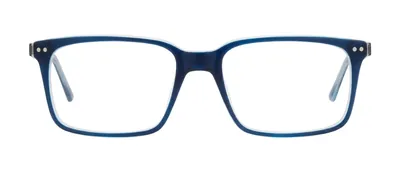
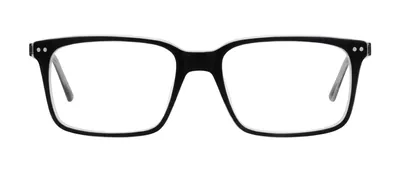
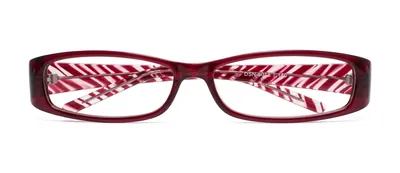
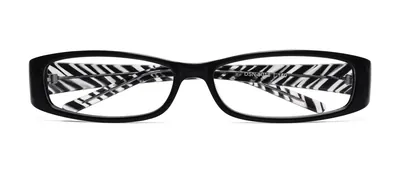
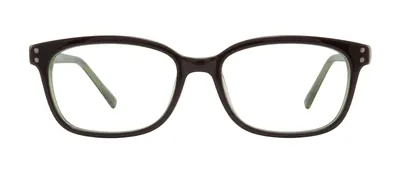
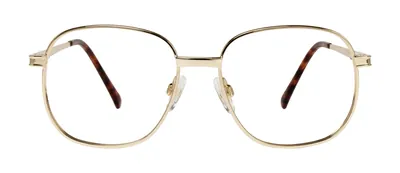
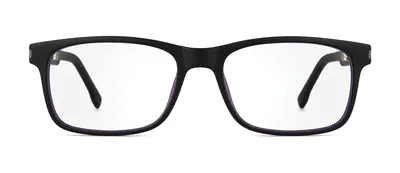
When you order prescription glasses, the lens type matters as much as the frame. The three most common options are single vision, bifocal and progressive. Your prescription usually tells you which one you need.
Single vision lenses
A single vision lens has one prescription power across the entire lens. It corrects vision at one distance, either far away or up close.
- Distance glasses for nearsightedness (minus SPH) are the most common single vision lenses: driving, TV, seeing across a room.
- Reading glasses for farsightedness or for close work are also single vision.
- Most kids and most adults under about 40 wear single vision lenses.
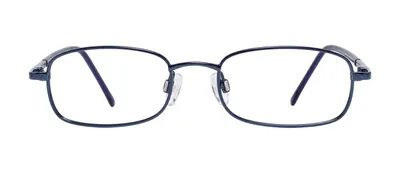
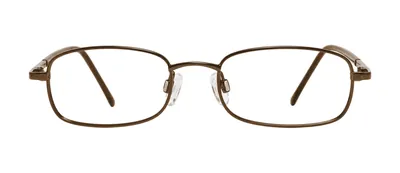
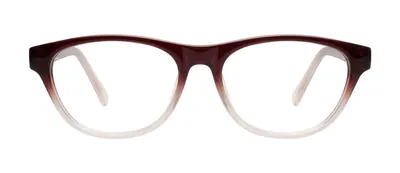
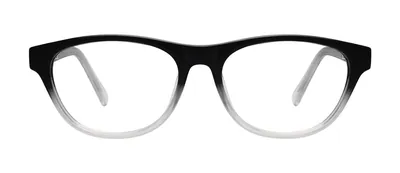
Single vision lenses are simple, affordable and easy to adapt to. They're what we make at Fast Eyeglasses: everyday frames are $79 with single vision lenses included.
Bifocal lenses
A bifocal lens has two powers: distance correction on top and a reading segment in the lower part of the lens, separated by a visible line. They're often prescribed for presbyopia, the natural loss of close-up focus that usually starts in the 40s.
Progressive lenses
Progressive lenses (sometimes called "no-line bifocals") blend smoothly from distance power at the top, through intermediate (computer distance) in the middle, to reading power at the bottom. They don't have a visible line, but they take some getting used to and cost more to make.
How to tell from your prescription
Look for an ADD value on your prescription (it may say "ADD," "Add power" or "NV" for near vision).
- No ADD: you need single vision lenses. You're ready to order.
- An ADD is listed: your doctor has prescribed extra reading power, usually for bifocals or progressives.
If your prescription has an ADD, you may still be able to use a separate pair of single vision glasses for just distance or just reading. For example, some people keep single vision distance glasses for driving. Ask your eye doctor what makes sense for you, and email us before ordering so we can confirm.
What about computer glasses?
If you spend hours at a screen, a single vision pair set for your computer distance can be more comfortable than reading or distance glasses. Ask your eye doctor for an intermediate prescription if you want a dedicated computer pair.
Quick summary
- Single vision: one power, one distance. Simple and affordable. No ADD on your Rx.
- Bifocal: two zones with a visible line. ADD on your Rx.
- Progressive: gradual zones, no line. ADD on your Rx.
Not sure what your prescription says? Start with how to read your eyeglass prescription.