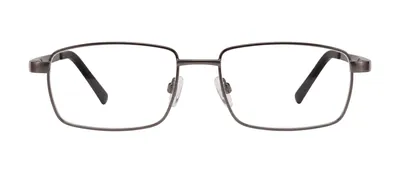
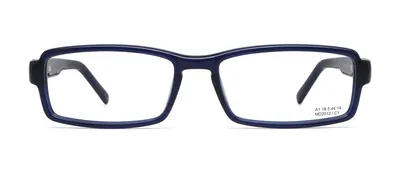
Transitions lenses are clear indoors and darken automatically when UV light from the sun hits them, so one pair works as everyday glasses and sunglasses. The most common question we get is simple: gray or brown? Both work the same way. The difference is color, contrast and how natural the world looks when they're dark.
The quick answer
| Gray | Brown | |
|---|---|---|
| How colors look | Most true to life. Colors stay natural, just dimmer. | Warmer. Reds and greens look richer. |
| Contrast | Neutral | Higher contrast and depth |
| Best for | Bright, sunny days and glare | Changing light, clouds, haze |
| Looks on the face | Cool, classic sunglass look | Warm, softer look |
| Popular with | Most first-time wearers | Golfers, cyclists, outdoor sports |
If you're not sure, gray is the safest pick. It changes the world the least, so it feels the most like wearing regular sunglasses.
When to choose gray
- You want colors to look normal. Gray cuts brightness evenly across all colors, so a red light still looks red and a blue sky still looks blue.
- You're out in strong sun. Beaches, snow, open roads and summer days are where gray shines.
- You like a classic look. Darkened gray lenses look like traditional sunglasses on almost any frame color.
When to choose brown
- You want more contrast. Brown filters some blue light, which can make edges, shadows and textures stand out. Many people say the world looks "sharper."
- Your light changes a lot. On partly cloudy or hazy days, brown keeps things bright and defined.
- You play outdoor sports. Contrast helps you track a ball against grass or sky and read terrain.
- You like warm tones. Brown pairs well with tortoise, brown, gold and warm-colored frames.
Do Transitions work in the car?
This surprises a lot of people: most car windshields block UV light, and UV is what makes standard Transitions darken. So in the car, Transitions usually stay mostly clear. If you mainly want sunglasses for driving, consider a dedicated pair of prescription sunglasses with a solid tint (gray or brown, +$20 with us) in addition to your everyday glasses.
Transitions vs. photochromic vs. solid tint
| Option | What it does | Our price |
|---|---|---|
| Transitions GEN S | The brand's fastest light-adaptive lens. Darkens outdoors and clears quickly indoors. Gray or brown. | +$68 |
| Photochromic | Clear indoors, darkens in sunlight. A lower-cost light-adaptive option. | +$55 |
| Solid tint | Always dark, like sunglasses. Gray or brown. Good for driving. | +$20 |
Tips before you order
- Add anti-glare. Anti-glare on the back of a darkened lens cuts reflections from the sun behind you. See is anti-glare worth it?
- Expect them to get darker in cold weather and a little lighter in heat. That's normal for light-adaptive lenses.
- Light-adaptive lenses can take a little longer to make than clear lenses. Most of our orders are made in one business day, and Transitions orders may take a bit longer.
- Pick a frame that covers your eyes well if you'll use them as sunglasses. Medium and large frames block more side light.
The bottom line
Choose gray for natural color and bright sun. Choose brown for contrast, changing light and outdoor sports. Either way, you get one pair of glasses that works inside and out. Add Transitions to any frame on the frame page: men's, women's or kids', $79 plus $68 for Transitions.