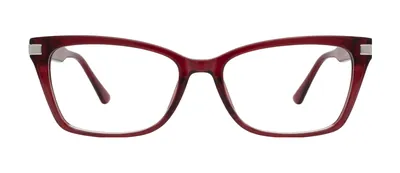
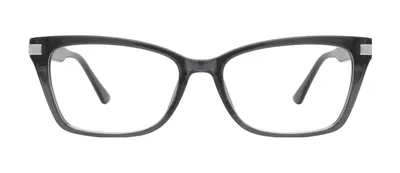
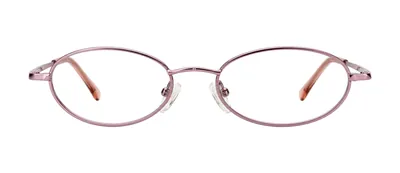
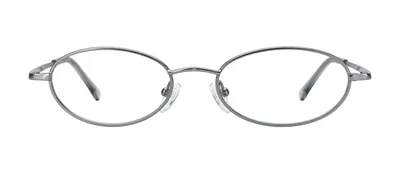
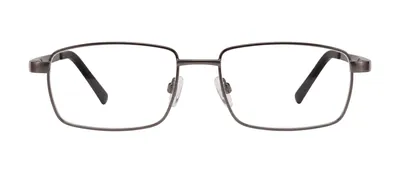
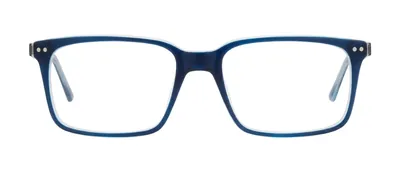
Somewhere in your 40s, small print starts to get harder to read. That's presbyopia, a normal age-related change in the eye's ability to focus up close. The quick fix is a pair of drugstore readers. But for many people, prescription reading glasses are more comfortable and clearer. Here's the difference.
How they're different
| Drugstore readers | Prescription reading glasses | |
|---|---|---|
| Power | Same in both lenses (+1.00, +1.50, +2.00...) | Exact power for each eye |
| Astigmatism (CYL) | Not corrected | Corrected |
| Lens centering | Set for an average face | Centered for your reading PD |
| Lens quality | Varies | Made to prescription tolerances |
| Frame choice | Limited | Any frame you like |
| Price | About $10 to $30 | Ours: $79 with lenses |
Drugstore readers may be fine if...
- You don't wear glasses for distance
- Both eyes need about the same reading power
- You have little or no astigmatism
- You only read for short periods
You probably need prescription readers if...
- Your eyes need different powers. Readers force both eyes to the same power, so one eye always works harder.
- You have astigmatism. Readers can't correct CYL, so text can stay slightly blurry or tiring.
- Your PD is wider or narrower than average. Off-center lenses can cause eye strain.
- You read or do close work for hours, like sewing, crafts or detailed work.
- Readers give you headaches or you can't find a strength that feels right.
How to get a reading prescription
Ask your eye doctor for a prescription written for reading only (near). Some prescriptions list distance numbers plus an ADD value instead. We make single vision lenses and don't fill ADD prescriptions as bifocals or progressives, so if yours has an ADD, ask your eye doctor's office to write out your reading-only prescription, or email us with a photo and we'll help.
Reading glasses use a reading PD
When you read, your eyes turn inward, so reading glasses are centered a little closer together, usually about 3 mm less than your distance PD. At our checkout, choose Reading only. We'll ask whether your PD has already been adjusted for reading, and if not, we adjust it for you.
Tips for reading glasses
- Expect distance to look blurry through reading glasses. That's normal; they're made for close up.
- Add anti-glare if you read on screens or under bright lamps.
- Choose a lightweight frame you can slip on and off easily. Metal frames with nose pads are comfortable for long reading sessions.
- Computer work? A screen is farther away than a book. See computer glasses.
Prescription reading glasses are $79 with single vision lenses, most made in one business day. Shop frames.