Close to home · Oregon
Strange coastal history
Terrible Tilly: the Oregon lighthouse that earned its nickname
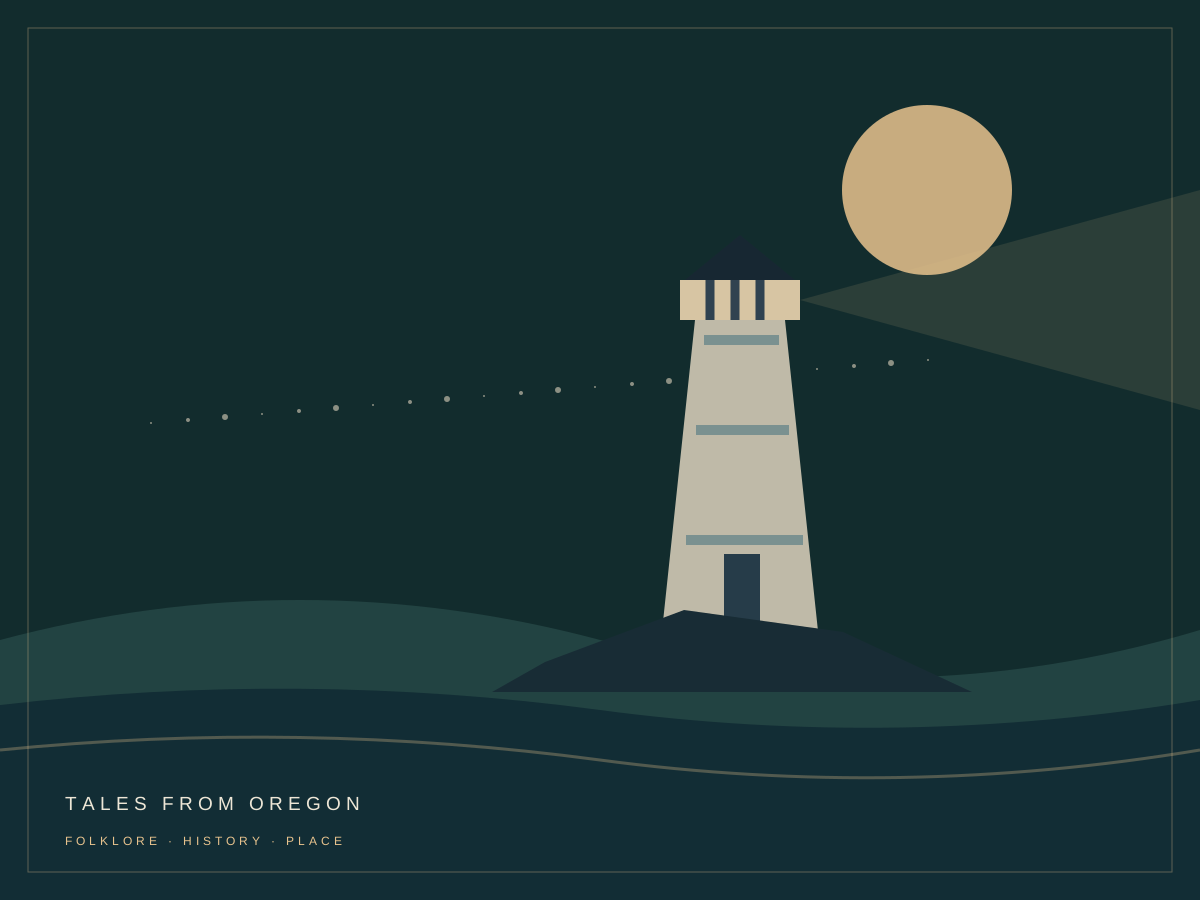
Some Oregon landmarks need very little help from a ghost story. Tillamook Rock Lighthouse stands offshore with a nickname that tells you the working conditions were not pleasant: Terrible Tilly. Its documented history includes isolation, violent weather and an unusual afterlife for the building itself. Those facts are a stronger starting point than an invented apparition.
The real predicament is already unsettling
Imagine being responsible for a working light while the shore is visibly separate from you. That is a narrative premise supplied by geography, not a supernatural claim. The Oregon Encyclopedia describes a light station whose nickname grew from the difficult conditions facing its keepers.
The lighthouse operated from 1881 to 1957 on a rock offshore of Tillamook Head. Read those dates as a working span: repeated routines, delayed supplies and people maintaining equipment in a place that was difficult to reach.
A storm story with an actual record
The historical entry describes a major 1934 storm damaging the station, its lens and communication arrangements. It is enough to know that the building’s defenses were tested severely; there is no need to add a fictional keeper’s last words or an invented rescue scene.
The same source follows the property beyond its lighthouse years to its use as a columbarium, a place intended for cremated remains. That later chapter is genuinely unusual. It should be described as a change in use, not offered as evidence that the site must therefore be haunted.
Why “afterlife” is such a tempting word
A building can outlive its original job, acquire a new purpose and then become a distant landmark people mainly look at. Tillamook Rock makes those changes unusually visible. Its separation from shore leaves room for a visitor’s imagination to fill in the details.
Try reading the history before looking at a distant view. Notice how a little factual knowledge changes what the outline means. You are no longer just seeing an eerie shape; you are thinking about work, maintenance, weather and the choices made after the light became obsolete.
Keep the story on the appropriate side of the water
Treat this as an offshore landmark, not an access challenge. The historical account identifies private ownership and its place within a wildlife-refuge setting. Do not infer landing rights from a lighthouse’s appearance on a travel page.
For a coastal outing, use the current information for an authorized shore viewpoint and check conditions. No attempt to approach the rock is needed to appreciate the story. The distance that makes it inaccessible is also part of what gives the view its power.
Sources & further reading
Checked October 18, 2026. The links below support the history and identify the traditions discussed here. The interpretation and discussion questions are our own.
Make a day—or a reading night—of it
Keep it close to home
More stories from Oregon
Heceta Head · Lighthouse folklore
Heceta Head’s Rue: the ghost story beside Oregon’s lighthouse
Read the Heceta Head keeper’s-house story of Rue alongside Oregon’s coastal lighthouse history, with clear labels for folklore and a practical visit check.
Read the local story ↗
Forest Park, Portland · History behind a nickname
Portland’s Witch’s Castle: the stone ruin behind the nickname
Explore the real Macleay Park Shelter beneath Portland’s Witch’s Castle nickname, using Forest Park Conservancy’s architectural history rather than invented witch lore.
Read the local story ↗
Old Town, Portland · Disputed urban legend
Portland’s Shanghai Tunnels: the history the legend leaves out
Separate documented shanghaiing from the disputed tunnel-network story, using the Oregon Encyclopedia’s account of Portland waterfront history.
Read the local story ↗
Astoria · Atmospheric local history
Astoria’s Flavel House: a storybook silhouette with real history
Explore Astoria’s Flavel House Museum, its Victorian architecture and preservation story, while keeping a spooky atmosphere separate from ghost claims.
Read the local story ↗Put this guide to work
Compare the relevant frames and ordering details before choosing your pair.