Close to home · Oregon
History behind a nickname
Portland’s Witch’s Castle: the stone ruin behind the nickname
The nickname does a remarkable amount of work. Say “Witch’s Castle,” and a mossy Portland ruin begins to sound like the last page of a fairy tale. Its documented history is more ordinary and more revealing: the structure was a park shelter. The interesting local story is how those two identities came to occupy the same stones.
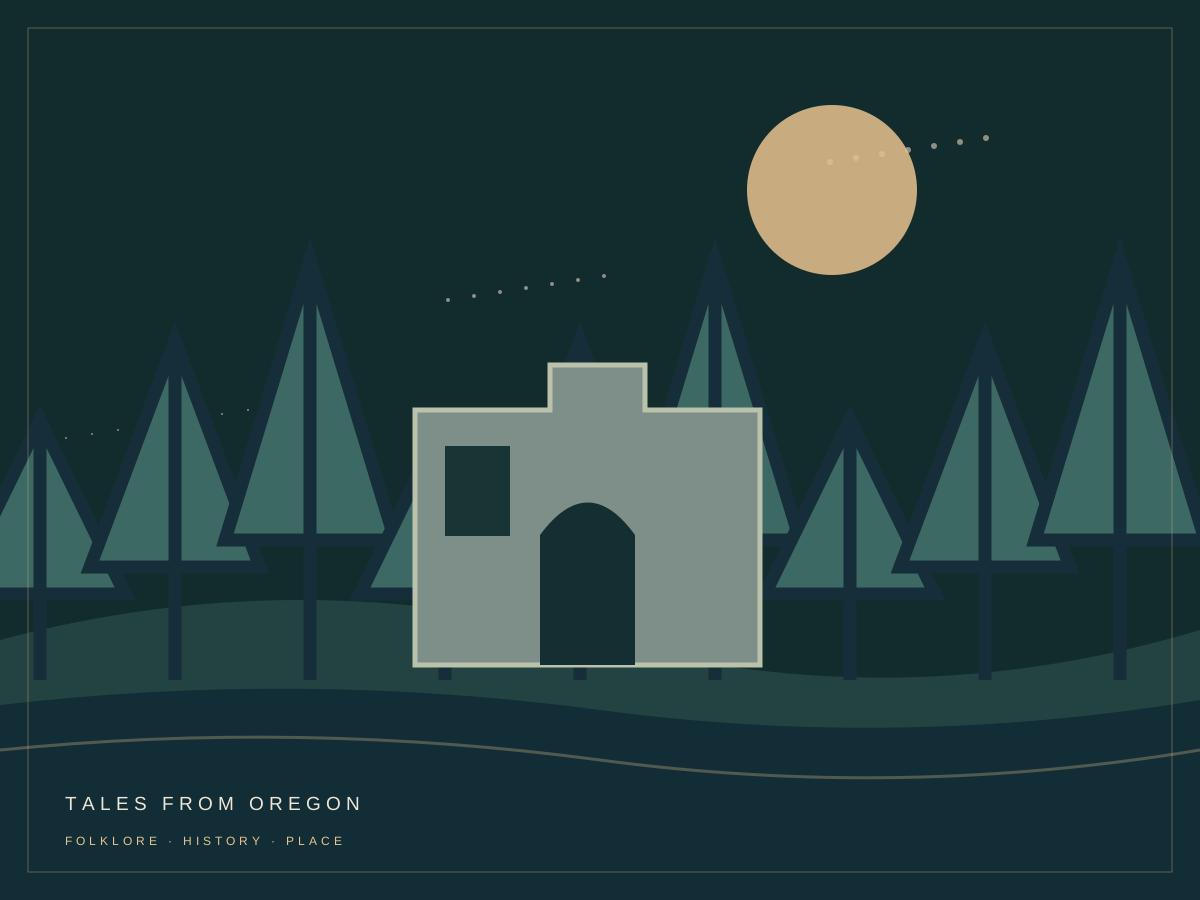
The name invites a story before the history arrives
A stone shell in a wooded ravine gives a visitor all the visual ingredients needed to imagine a fairy-tale house. The Witch’s Castle nickname supplies a resident and a genre before anyone reads an interpretation panel.
That is a reason to look more closely, not permission to add an invented occupant. A photograph can show the structure’s atmosphere. It cannot establish the biography that a dramatic nickname seems to imply.
What the architectural record describes
Forest Park Conservancy’s archived history identifies the building as the Macleay Park Shelter, designed by Ernest F. Tucker in 1929. Its intended functions included toilets, a picnic shelter and a tool room. The source notes uncertainty about precisely when construction began.
The account links its later dismantling to damage to the water supply after the 1962 Columbus Day Storm. What remains is an architectural ruin, not the intact home of a documented witch. The distinction is worth making because it gives the building an actual history rather than merely removing a good story.
There is still a wonderfully strange idea here
The shelter was meant to belong visually to its woodland setting. Now the missing parts make it feel less like a facility and more like a fragment of another narrative. Think about how a roof, a sign or a working doorway would change the mood of the same site.
Ask why a practical place becomes romantic once its purpose is no longer obvious. The question applies to old stations, abandoned gardens and empty industrial sites too. Portland’s version is distinctive because the forest and the nickname reinforce each other so effectively.
Visit as a park user, not a trespass challenge
Check current Forest Park conditions and official guidance before walking. Stay on open routes, follow closures and avoid climbing the ruin. This article is not a route guide or a claim that every pictured approach is currently accessible.
A daylight visit can be the better storytelling exercise: identify one feature that hints at the former practical use, then one that makes the nickname feel plausible. The point is to notice how an interpretation forms, not to demonstrate bravery by arriving after the park’s permitted hours.
Sources & further reading
Checked October 18, 2026. The links below support the history and identify the traditions discussed here. The interpretation and discussion questions are our own.
Make a day—or a reading night—of it
Keep it close to home
More stories from Oregon
Heceta Head · Lighthouse folklore
Heceta Head’s Rue: the ghost story beside Oregon’s lighthouse
Read the Heceta Head keeper’s-house story of Rue alongside Oregon’s coastal lighthouse history, with clear labels for folklore and a practical visit check.
Read the local story ↗
Old Town, Portland · Disputed urban legend
Portland’s Shanghai Tunnels: the history the legend leaves out
Separate documented shanghaiing from the disputed tunnel-network story, using the Oregon Encyclopedia’s account of Portland waterfront history.
Read the local story ↗
Tillamook Rock, north coast · Strange coastal history
Terrible Tilly: the Oregon lighthouse that earned its nickname
Discover Tillamook Rock Lighthouse’s isolation, storm history and later columbarium chapter through the Oregon Encyclopedia, without inventing a haunting.
Read the local story ↗
Astoria · Atmospheric local history
Astoria’s Flavel House: a storybook silhouette with real history
Explore Astoria’s Flavel House Museum, its Victorian architecture and preservation story, while keeping a spooky atmosphere separate from ghost claims.
Read the local story ↗Put this guide to work
Compare the relevant frames and ordering details before choosing your pair.