Close to home · Oregon
Disputed urban legend
Portland’s Shanghai Tunnels: the history the legend leaves out
An underground passage is an efficient storytelling device. It hides an entire second city beneath the one people think they know. Portland’s Shanghai Tunnels tradition uses that idea with unusual force—but the distinction between documented coercion at a port and a proven tunnel network is the part readers most need to keep.
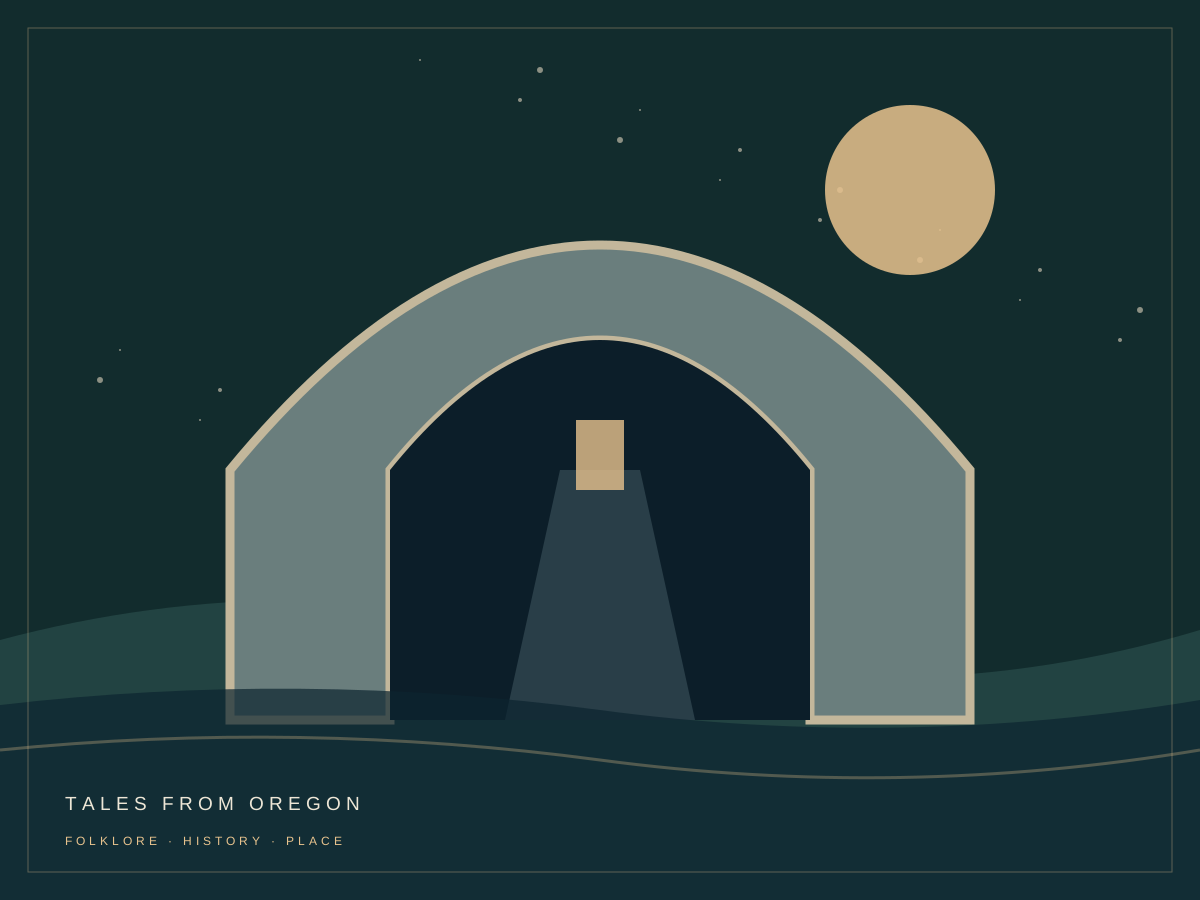
The familiar underground-city version
The popular story imagines a hidden system beneath the waterfront used to move unwilling sailors onto ships. It combines an actual exploitative practice with a landscape that a listener cannot easily inspect from the street. That combination helps the story feel both secret and complete.
The mistake is assuming that proof of one element proves every element. A real crime, an old basement and a memorable tour narrative do not automatically add up to evidence of a large, connected underground transport system.
What the Oregon Encyclopedia distinguishes
Historian Richard Engeman’s Oregon Encyclopedia entry separates shanghaiing and crimping from the later tunnel-network narrative. It describes how waterfront storytelling and accounts promoted from the 1970s helped the tunnel tradition take shape.
The entry says historians have not found evidence for a network connected to the shanghai trade. That does not make coercion against sailors imaginary. It means the historical harm and the particular infrastructure claimed for it must be evaluated independently.
Why the correction improves the story
The documented subject is a waterfront labor system in which people could be coerced and exploited. Treating the most cinematic detail as the only interesting part can obscure the lives involved. The history does not become less important when an attractive mechanism is disputed.
A useful question for any tour or retelling is what evidence supports this particular room, route or claim. A guide can tell an atmospheric story while clearly marking what is a document, an interpretation or a legend. Asking that question is part of being an engaged visitor, not spoiling everyone’s evening.
Explore the subject with two reading lists
Put folklore and historical research beside each other. Note which source supports a statement about sailors, which supports a specific building and which merely repeats an underground-city image. You may find the changes between versions more interesting than a single dramatic conclusion.
If considering an organized visit, check the operator’s current details and understand what space the ticket actually covers. Do not seek entry into basements or service areas on your own. A historic-sounding name is not permission to explore property beyond an authorized tour.
Sources & further reading
Checked October 18, 2026. The links below support the history and identify the traditions discussed here. The interpretation and discussion questions are our own.
Make a day—or a reading night—of it
Keep it close to home
More stories from Oregon
Heceta Head · Lighthouse folklore
Heceta Head’s Rue: the ghost story beside Oregon’s lighthouse
Read the Heceta Head keeper’s-house story of Rue alongside Oregon’s coastal lighthouse history, with clear labels for folklore and a practical visit check.
Read the local story ↗
Forest Park, Portland · History behind a nickname
Portland’s Witch’s Castle: the stone ruin behind the nickname
Explore the real Macleay Park Shelter beneath Portland’s Witch’s Castle nickname, using Forest Park Conservancy’s architectural history rather than invented witch lore.
Read the local story ↗
Tillamook Rock, north coast · Strange coastal history
Terrible Tilly: the Oregon lighthouse that earned its nickname
Discover Tillamook Rock Lighthouse’s isolation, storm history and later columbarium chapter through the Oregon Encyclopedia, without inventing a haunting.
Read the local story ↗
Astoria · Atmospheric local history
Astoria’s Flavel House: a storybook silhouette with real history
Explore Astoria’s Flavel House Museum, its Victorian architecture and preservation story, while keeping a spooky atmosphere separate from ghost claims.
Read the local story ↗Put this guide to work
Compare the relevant frames and ordering details before choosing your pair.