Close to home · Oregon
Atmospheric local history
Astoria’s Flavel House: a storybook silhouette with real history
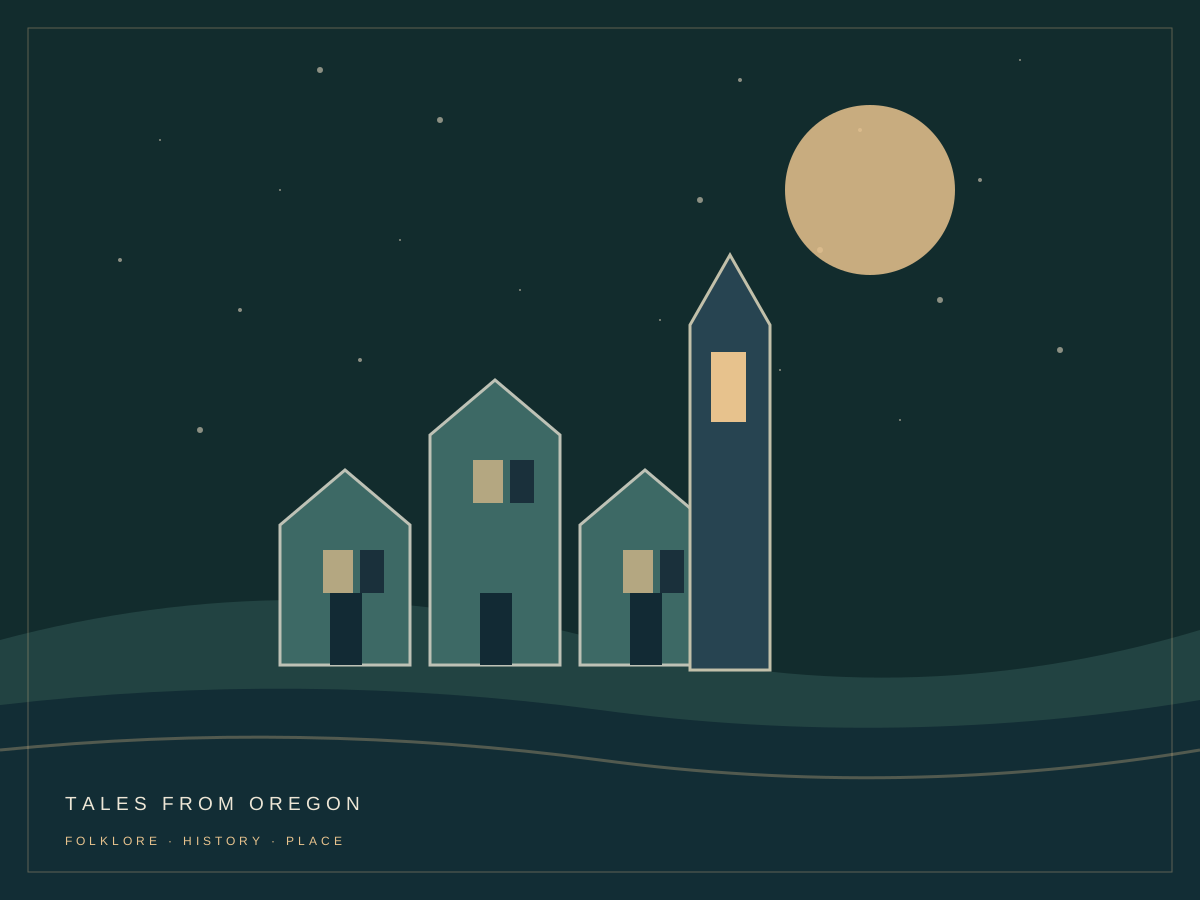
A tower, patterned surfaces and a house that seems ready for a dramatic entrance: Astoria’s Flavel House has the outline a ghost-story illustrator might choose. The more rewarding local question is what the building actually preserves. Its museum story is about a family, a port city and people who decided the house should survive.
Begin with the right house
The Clatsop County Historical Society identifies the Flavel House Museum as Captain George Flavel’s retirement home and a notable example of Queen Anne architecture. Use the museum’s full name when researching rather than assuming that every story attached to the Flavel name concerns the same property.
That basic identification is a useful defense against a common local-history problem: an arresting anecdote travels farther than its address. Before repeating a story, establish which building, which resident and which source it actually belongs to.
A tower had a practical point of view
The museum’s account connects Captain Flavel’s career with Columbia River bar piloting and business in Astoria. It also describes a tower with a broad view of the city and river traffic. That gives the familiar silhouette a working connection to the surrounding port.
The historical society recounts threats to demolish the house and the eventual effort to retain it as a museum. This is a different kind of suspense: the possibility that a landmark people now recognize could have been lost to another use.
Let architecture supply the mood honestly
A complicated roofline, changing surfaces and a tower can feel theatrical without requiring an unseen resident. Look at the building as a set of design decisions. Which feature makes you expect a story? Which would change the mood most if it disappeared?
That exercise is especially good with family photographs or sketches. Label a drawing as your response to the building, not as a reconstruction of an event that happened inside. Imagination is welcome; it simply needs to introduce itself.
Make a museum visit about more than the silhouette
Check the historical society’s current hours, admission arrangements and visitor policies before planning a stop. Use its account to choose one question about the household and one about the building’s survival. Let staff and interpretation supply the answers rather than arriving with a ghost story to confirm.
For an at-home version, compare an exterior image with a floor plan or room description from the museum. Ask how a building designed for ordinary family routines becomes a dramatic landmark in later eyes. That is a recognizably Astoria conversation without a fabricated haunting.
Sources & further reading
Checked October 18, 2026. The links below support the history and identify the traditions discussed here. The interpretation and discussion questions are our own.
Make a day—or a reading night—of it
Keep it close to home
More stories from Oregon
Heceta Head · Lighthouse folklore
Heceta Head’s Rue: the ghost story beside Oregon’s lighthouse
Read the Heceta Head keeper’s-house story of Rue alongside Oregon’s coastal lighthouse history, with clear labels for folklore and a practical visit check.
Read the local story ↗
Forest Park, Portland · History behind a nickname
Portland’s Witch’s Castle: the stone ruin behind the nickname
Explore the real Macleay Park Shelter beneath Portland’s Witch’s Castle nickname, using Forest Park Conservancy’s architectural history rather than invented witch lore.
Read the local story ↗
Old Town, Portland · Disputed urban legend
Portland’s Shanghai Tunnels: the history the legend leaves out
Separate documented shanghaiing from the disputed tunnel-network story, using the Oregon Encyclopedia’s account of Portland waterfront history.
Read the local story ↗
Tillamook Rock, north coast · Strange coastal history
Terrible Tilly: the Oregon lighthouse that earned its nickname
Discover Tillamook Rock Lighthouse’s isolation, storm history and later columbarium chapter through the Oregon Encyclopedia, without inventing a haunting.
Read the local story ↗Put this guide to work
Compare the relevant frames and ordering details before choosing your pair.