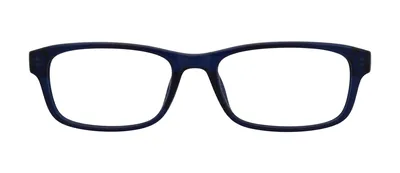
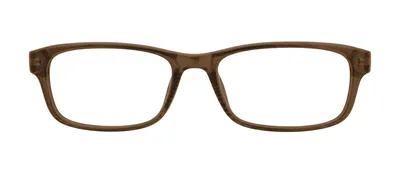
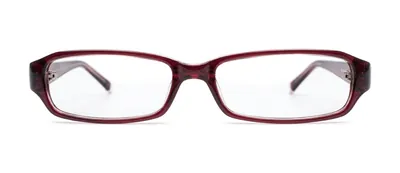
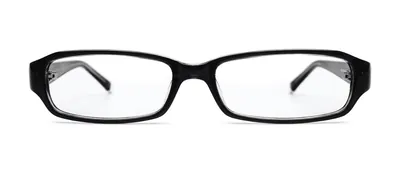
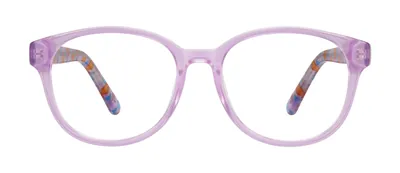
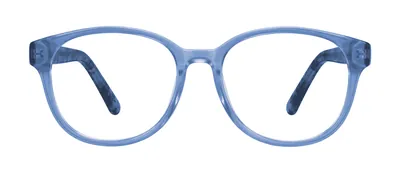
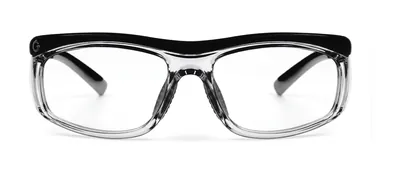
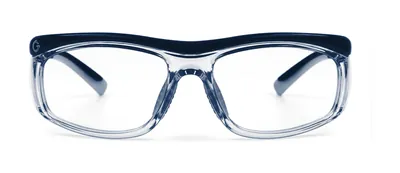
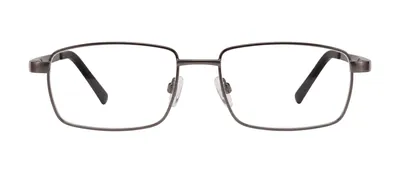
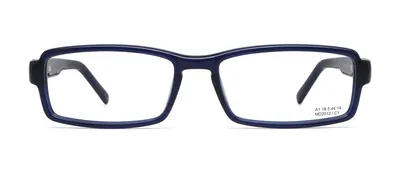
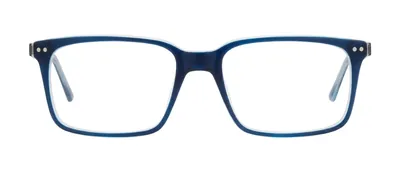
Single vision lenses have one prescription power across the entire lens. Whether you're nearsighted, farsighted or have astigmatism, a single vision lens corrects your vision at one distance, so everything you look through the lens is equally sharp at that distance.
Who needs single vision lenses?
- Nearsighted (myopia): distant things look blurry. Your SPH number has a minus sign, like -1.75.
- Farsighted (hyperopia): close-up things are harder to focus on. Your SPH number has a plus sign, like +1.50.
- Astigmatism: blur at all distances from an unevenly curved eye. Your prescription has CYL and AXIS numbers. Read what astigmatism means on your prescription.
- Reading only: if you only need help up close, single vision reading glasses use your reading power across the whole lens.
If your prescription has an ADD value, you may need bifocals or progressives instead, or a separate single vision pair for each task. Compare them in single vision vs. bifocal vs. progressive.
Distance, reading and computer glasses
All three are single vision; the difference is the power and the distance they're made for:
- Distance / everyday: made with the numbers on your prescription. For driving, TV and most of the day.
- Reading: made with your near power. These use a slightly smaller reading PD, usually about 3 mm less than your distance PD. At checkout we ask whether your PD has already been adjusted, and adjust it for you if not.
- Computer: made for arm's-length screen distance. Ask your eye doctor for a computer power if you spend long days at a screen.
Why single vision lenses are popular
- Widest clear field of view: the whole lens works, with no reading zone or lines.
- Easiest to adapt to: most people adjust in a day or two.
- Least expensive: simpler to make, so they cost less and are made faster. Most of ours are made in one business day.
Single vision lens options
| Option | What it does | Our price |
|---|---|---|
| Standard plastic (CR-39) | Clear, light everyday lens | Included |
| Polycarbonate | Thinner, impact-resistant, with scratch coating and UV protection | +$15 |
| 1.67 high-index | Our thinnest lens for strong prescriptions | +$45 |
| Standard anti-glare | Cuts screen and headlight glare | +$35 |
| Crizal Easy anti-glare | Premium anti-glare that's easier to clean | +$50 |
| Solid tint | Prescription sunglasses, gray or brown | +$20 |
| Photochromic / Transitions | Darkens in sunlight | +$55 / +$68 |
Lenses include powers up to ±4.00 SPH and 3.00 CYL. Stronger prescriptions add $15 per pair plus $1.50 for each extra diopter per lens, and it's added to your total automatically when you type your prescription.
How to choose
- Mild prescription, everyday wear: standard plastic, plus anti-glare if you drive at night or use screens a lot.
- Kids or active lifestyle: polycarbonate.
- Strong prescription (beyond about ±4.00): 1.67 high-index for thinner, lighter lenses.
- Outdoors a lot: a tint or Transitions.
Single vision glasses start at $79 with lenses, made in one business day for most orders. Shop frames.