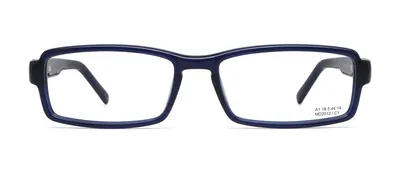
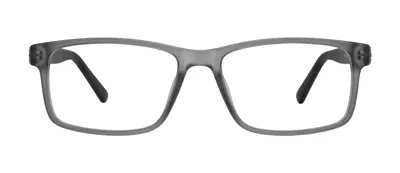
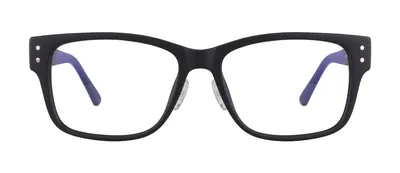
Nearsighted and farsighted are the two most common reasons people need glasses, and they're easy to mix up. The names describe what you can see well: nearsighted people see near things clearly; farsighted people see far things more easily.
At a glance
| Nearsighted (myopia) | Farsighted (hyperopia) | |
|---|---|---|
| Clear | Close up | Far away (especially when younger) |
| Blurry or tiring | Far away: road signs, TV, the board | Close up: reading, phones, sewing |
| On your prescription | Minus SPH, like -2.25 | Plus SPH, like +1.75 |
| Why | Light focuses in front of the retina | Light focuses behind the retina |
| Lens shape | Thinner in the center, thicker at the edges | Thicker in the center |
Nearsighted (myopia)
If road signs, the TV or faces across the room look blurry, but your phone is sharp, you're likely nearsighted. It often starts in childhood and can change through the teen years. Common signs: squinting at distance, headaches after driving, kids sitting close to the TV or struggling to see the board.
On your prescription, nearsightedness shows as a minus number in the SPH column. The bigger the number, the stronger the correction.
Farsighted (hyperopia)
Farsighted eyes have to work harder to focus, especially up close. Younger people can often focus through mild farsightedness without noticing, but it can cause eye strain, headaches or tired eyes when reading. On your prescription, farsightedness shows as a plus number in the SPH column.
Where astigmatism fits in
Astigmatism means the eye's surface is curved unevenly, causing blur or distortion at all distances. It can occur alongside nearsightedness or farsightedness, and shows up as CYL and AXIS numbers on your prescription. Read what astigmatism means on your prescription.
Presbyopia isn't the same as farsightedness
Around age 40, almost everyone starts having trouble focusing up close. That's presbyopia, the lens inside the eye becoming less flexible with age. It feels similar to farsightedness, but it's a different condition, and it happens to nearsighted people too. It's why many people need reading glasses in their 40s.
Lens tips for each
- Nearsighted, strong prescription (beyond about -4.00): lenses get thicker at the edges. Choose smaller frames and 1.67 high-index lenses; plastic rims hide edge thickness well.
- Farsighted, strong prescription: lenses get thicker in the center and can magnify your eyes. Smaller, rounder frames and high-index lenses help.
- Both: anti-glare makes thicker lenses look cleaner and cuts reflections.
Our lenses include powers up to ±4.00 SPH and 3.00 CYL; stronger prescriptions add a small charge that's shown in your total as soon as you type your prescription.
Get an eye exam
Only an eye exam can tell you for sure whether you're nearsighted, farsighted or both. Kids should have their vision checked regularly, and adults whenever vision changes. Once you have your prescription, here's how to read it.
Ready for new glasses? Shop frames, $79 with single vision lenses for nearsighted and farsighted prescriptions.