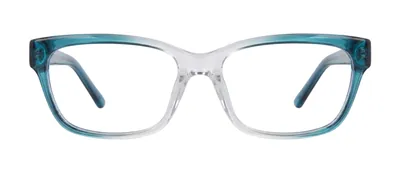
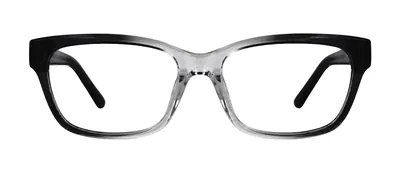
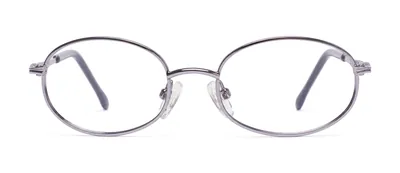
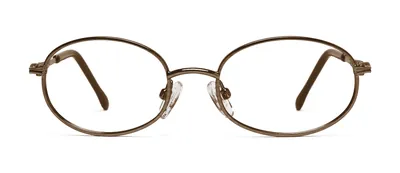
When you order prescription glasses, the first lens choice is the material. It decides how thick, heavy and tough your lenses are. The three common options are standard plastic (CR-39), polycarbonate and high-index. Here's how polycarbonate vs. high-index lenses really compare, and when standard plastic is all you need.
The quick answer
| Your prescription (SPH) | Good choice | Price with us |
|---|---|---|
| Up to about ±2.00 | Standard plastic (CR-39) | Included |
| About ±2.00 to ±4.00 | Polycarbonate | +$15 |
| Stronger than ±4.00 | High-index 1.67 | +$45 |
| Kids, sports, safety | Polycarbonate, at any strength | +$15 |
These are rules of thumb, not hard cutoffs. A bigger frame makes lenses thicker at the edges, so a strong prescription in a large frame benefits even more from a thinner material.
What "index" means
The index of refraction is how strongly a material bends light. A higher index bends light more, so the lens needs less material to reach the same power. That's why a higher-index lens is thinner.
- Standard plastic (CR-39): index about 1.50
- Polycarbonate: index about 1.59
- High-index: index 1.67
Polycarbonate lenses
Polycarbonate is thinner and lighter than standard plastic, and it's far more impact-resistant. That makes it the standard choice for kids' glasses, sports and prescription safety glasses. It also blocks UV naturally.
The trade-off: polycarbonate scratches more easily on its own, so it should always have a scratch-resistant coating. Ours includes one. Some people also notice slight color fringing at the edges of very strong polycarbonate lenses. Most people never do.
Best for: kids, active people, safety glasses, and moderate prescriptions where you want something lighter and tougher than standard plastic.
High-index 1.67 lenses
High-index 1.67 is the thinnest and lightest lens we offer. If you're nearsighted, a strong minus prescription makes lenses thick at the edges. If you're farsighted, a strong plus prescription makes them thick in the middle. High-index cuts that bulk noticeably, so glasses look better and sit lighter on your nose.
High-index lenses reflect more light than standard plastic, so pairing them with anti-glare is a good idea. It makes the thinner lens look nearly invisible.
Best for: prescriptions stronger than about ±4.00, people with astigmatism plus a strong sphere, and anyone who wants the thinnest possible lens.
Standard plastic (CR-39)
CR-39 has the best optical clarity of the three and costs the least. It's included with every pair of our glasses. For a mild prescription, it's a great lens. It's just thicker and less impact-resistant than the others.
Side by side
| CR-39 | Polycarbonate | Hi-index 1.67 | |
|---|---|---|---|
| Thickness | Thickest | Thinner | Thinnest |
| Weight | Light | Lighter | Lightest |
| Impact resistance | Standard | Highest | Good |
| Optical clarity | Best | Good | Very good |
| Price with us | Included | +$15 | +$45 |
How to choose when you order
- Find the SPH number for each eye on your prescription. Look at the one furthest from zero. (New to this? Read how to read your prescription.)
- If you also have astigmatism (a CYL number), lean one step thinner.
- Use the table above, then add anti-glare if you picked high-index or drive a lot at night.
Every frame on our site is $79 with standard single vision lenses, and you choose your lens material on each frame page, with the price shown. Shop all frames.