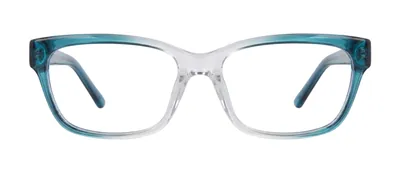
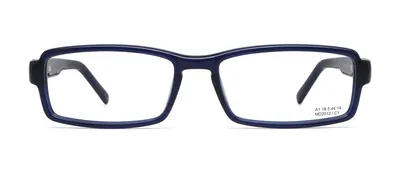
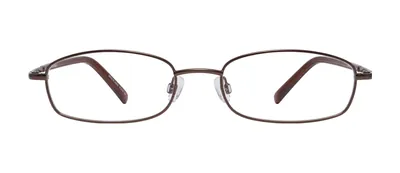
The two main choices for eyeglass frames are metal and plastic. Metal frames are thin, light and adjustable. Plastic frames are bolder, come in more colors and hold up well to everyday knocks. Neither is better overall. The right one depends on your face, your prescription, your style and how you treat your glasses.
This guide compares the two on everything that matters, explains when each is the better choice, and helps you decide.
Metal vs. plastic at a glance
| Metal frames | Plastic frames | |
|---|---|---|
| Look | Thin, minimal, classic | Bold, colorful, statement-making |
| Weight | Usually lighter | Usually a little heavier |
| Nose fit | Adjustable nose pads on most styles | Molded bridge, no pads on most styles |
| Colors | Gold, silver, gunmetal, black and a few tones | Almost any color, plus tortoise and crystal |
| Durability | Can bend, and can usually be bent back | Resists dents and bends, can crack under hard force |
| Adjustability | Easy to adjust | Can be adjusted with gentle heat, within limits |
| Strong prescriptions | Thin rims show thick lens edges more | Thicker rims hide thick lens edges |
| Skin sensitivity | Some metals can bother people with nickel allergies | Rarely a concern |
Metal frames: pros and cons
Metal frames have been around the longest. Today they range from fine wire rims to aviators and modern geometric shapes.
Pros
- Light and minimal. Thin rims put the focus on your face, not your glasses. Many people forget they're wearing them.
- Adjustable nose pads. Pads can be bent to fit almost any nose, which is a big deal if glasses always slide or sit crooked on you.
- Good for low or narrow bridges. Pads can sit where a molded plastic bridge can't.
- Professional look. Thin gold, silver or gunmetal frames read as polished and understated.
- Easy to fine-tune. An optician can adjust the temples and pads in minutes.
Cons
- Can bend. Sitting on them or throwing them in a bag can knock them out of shape. The upside is they can usually be bent back.
- Fewer colors. Mostly metallic tones and black.
- Show thick lenses. With a strong prescription, a thin rim leaves more of the lens edge visible.
- Nose pads need care. Pads can collect oil and occasionally need tightening or replacing.
- Allergies. A small number of people react to nickel in some metal frames. If that's you, ask about the frame's materials before you buy.
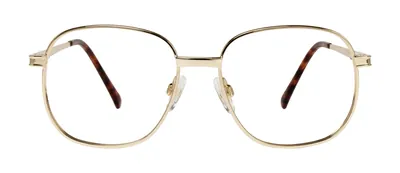
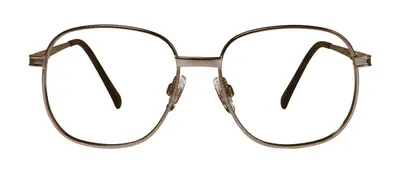
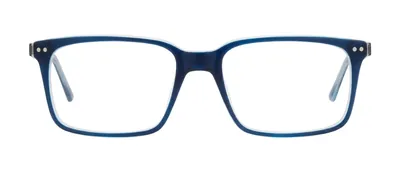
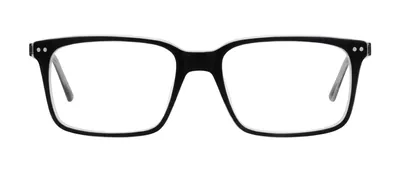
Shop metal glasses, like Arthur in gold or Rebecca in black.
Plastic frames: pros and cons
Plastic frames are the most popular choice today. They come in every shape and nearly every color, from classic black to tortoise to clear crystal.
Pros
- Color and personality. Tortoise, crystal, navy, plum, teal, two-tones and more.
- Tough in everyday use. Plastic shrugs off small knocks and doesn't bend out of shape in a bag or pocket.
- Hide thick lenses. A thicker rim covers more of the lens edge, which is a real advantage for strong prescriptions.
- Low maintenance. No nose pads to adjust or clean.
- Great for kids. Most kids' glasses are plastic for exactly these reasons.
Cons
- Fixed bridge. A molded bridge can't be adjusted much. If it doesn't suit your nose, the glasses may slide.
- Slightly heavier. Usually not noticeable, but thicker frames can feel heavier over a long day.
- Can crack. Plastic resists everyday bumps, but a hard snap can break it, and it can't be bent back.
- Heat. Leaving plastic frames on a hot dashboard can warp them.
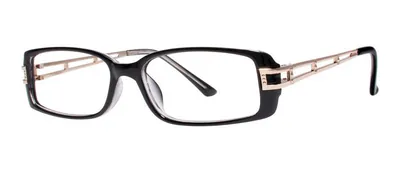
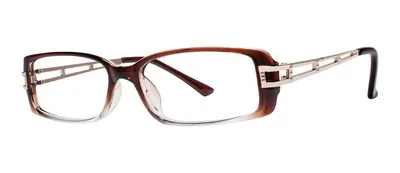
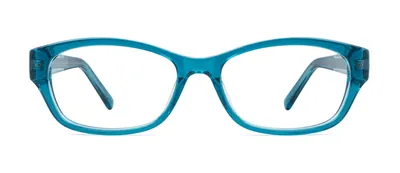
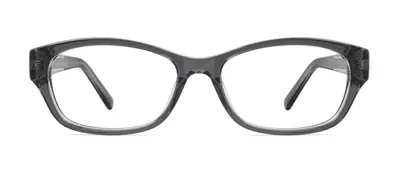
Shop plastic frames like Affiliate or Amber, or browse all frames.
Choose metal frames if…
- You want a light, barely-there look
- Glasses always slide down your nose. Read why glasses slide down your nose for more fixes.
- You have a low or narrow bridge
- Your prescription is mild to moderate, so thin lens edges won't show much
- You want a polished, professional style
Choose plastic frames if…
- You want color or personality
- You have a strong prescription and want to hide lens thickness. Pair it with high-index lenses for the thinnest result. See polycarbonate vs. high-index lenses.
- You're hard on your glasses
- You're buying for kids
- You'd rather not deal with nose pads
Which material suits your face?
Material changes how strong a frame looks, which affects which face shapes it flatters.
- Round faces: thicker plastic rectangles and squares add the structure a round face benefits from. See the round face guide.
- Square faces: thin metal rounds and aviators soften a strong jaw. See the square face guide.
- Heart-shaped faces: thin metal keeps the top of the face light. See the heart-shaped face guide.
- Oval faces: either works. See the oval face guide.
- Small faces: thin metal frames often look less overwhelming. See glasses for small and narrow faces.
What about safety glasses?
Both materials are used for prescription safety glasses. Our prescription safety glasses come in plastic wraps and metal frames with side shields, all $149 with single vision lenses. If your employer requires a specific safety rating, email us before ordering so we can confirm the right lens. Read what to know before you buy safety glasses.
How to make either last
- Take glasses off with both hands so you don't stretch one hinge.
- Keep them in a case, not loose in a bag or pocket.
- Don't leave them in a hot car.
- Clean them properly: lukewarm water, a drop of dish soap and a microfiber cloth. See how to clean your glasses.
Frequently asked questions
Are metal or plastic glasses more durable?
It depends on the kind of damage. Plastic resists everyday bumps and won't bend out of shape. Metal can bend but can usually be bent back, while a hard snap can crack plastic.
Are metal glasses lighter than plastic?
Usually, yes, especially thin wire frames. Thick plastic frames tend to weigh a little more.
Which is better for a strong prescription?
Plastic frames, because the thicker rim hides more of the lens edge. High-index lenses help in either material.
Do metal frames always have nose pads?
Most do. Pads make metal frames easy to adjust for different noses.
Do metal and plastic frames cost the same?
At Fast Eyeglasses, yes. Every everyday frame is $79 with single vision prescription lenses included, metal or plastic.
Shop both
Metal or plastic, everyday frames are $79 with single vision prescription lenses included, with free shipping to Michigan, Oregon, Montana and Delaware. Most pairs are made in one business day. Compare sizes using the three numbers on every frame page, and read how to find your glasses size if you're unsure. Shop all frames.