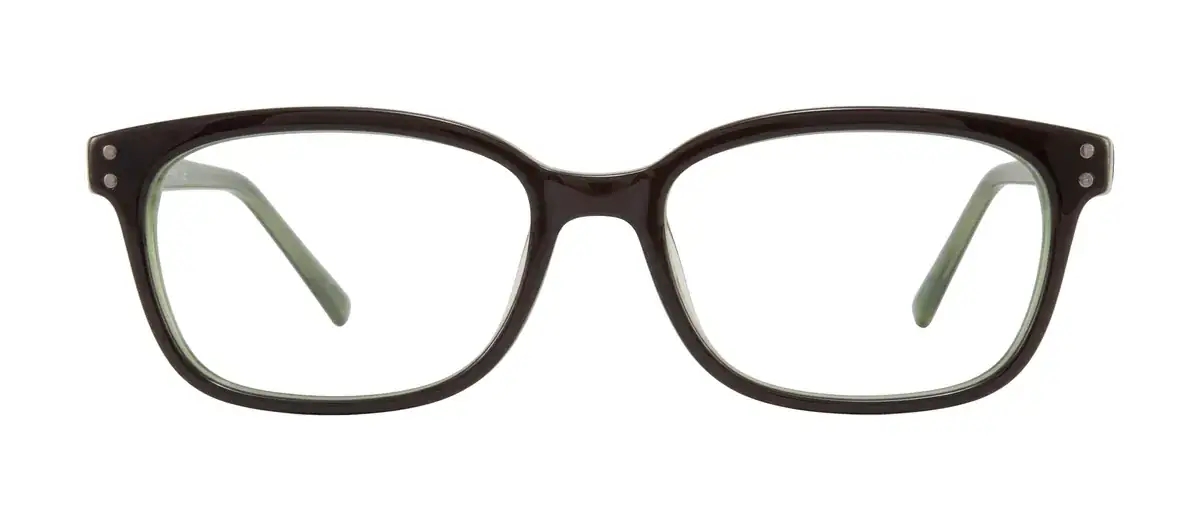
The front photo usually wins your attention, but the side view can answer a different set of questions. Before buying glasses you cannot try on, look at the arms, color placement and bridge profile where the photographs show them. Treat missing views as missing information, not permission to invent the detail.
Look for the features that share space with you
Notice the arm shape, the visible hinge area and how the frame extends back from the front. If you wear a headset or another accessory, record the area you are concerned about.
A side image can help you identify a question, but it cannot show exactly how the frame will feel around your own ears. Ask about fit and dimensions rather than claiming comfort from a photograph.
Check color placement from another angle
A two-color finish may be more noticeable at the side than from the front. Look at the specific color option rather than assuming every photograph on a model page shows the same finish.
If the page has one side view for several colors, use the selected-color front photo and ask whether the side view represents that option. Save the model and finish name with the question.
Do not estimate unlisted measurements from perspective
A side photograph is not a calibrated diagram. Camera angle and image scaling can change apparent proportions. Use written dimensions or request the measurement you need.
When a side detail is important and unavailable, ask before paying. That is more useful than discovering after delivery that the feature you imagined was never shown.
Use a specific frame for your comparison
Open the exact model and selected size when you investigate a fit question. These Fast Eyeglasses listings give you concrete options to compare with your own reference pair.
- View Advice frame details — listed sizes: 53–18–135.
- View Motion frame details — listed sizes: 52–17–140.
Frame sizes describe lens width, bridge width and arm length. Check current options and availability on the product page. Ask about any important measurement that is missing.