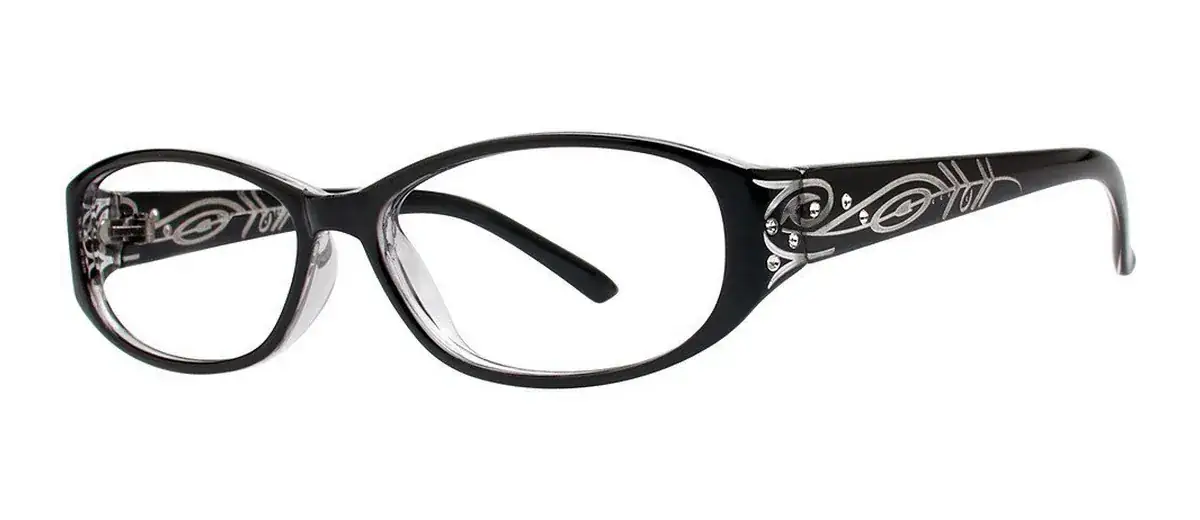
When your current glasses feel tight at the sides, a larger-looking photo is not enough to choose the replacement. Find out which part of the fit needs more room. The front, bridge and arms work together, and a change to one printed number does not describe the whole frame.
Keep pressure and style preferences separate
Wanting a larger lens opening is a style choice. A frame pressing at the sides is a fit concern. Write down which problem you are trying to solve before browsing larger frames.
An optician can help assess an uncomfortable pair. Do not force the arms outward or assume a new pair can be made comfortable with heat at home. Ask about fitting help and the particular frame instead.
Compare more than the first size number
Eileen and Teach both list 56 mm lens widths, but their listed bridges and arm lengths differ. One is not automatically a roomier version of the other. Ask for total front width if that is the dimension you need.
Use the bridge shape and side photographs as additional information. Matching one number is useful for narrowing options, but it does not guarantee the same feel where the frame touches you.
Do not buy the largest size by default
A larger option may also have longer arms or a different bridge. Read the entire size sequence before changing a selector. Keep a useful reference pair beside the candidate.
If none of the available details answer the pressure question, pause for fitting advice. Buying custom glasses without trying on works better when the unresolved issue is clearly identified than when a large-size label is treated as an answer.
Use a specific frame for your comparison
Open the exact model and selected size when you investigate a fit question. These Fast Eyeglasses listings give you concrete options to compare with your own reference pair.
- View Eileen frame details — listed sizes: 56–17–140.
- View Teach frame details — listed sizes: 56–16–145.
Frame sizes describe lens width, bridge width and arm length. Check current options and availability on the product page. Ask about any important measurement that is missing.