Close to home · Oregon · Volume two
Shipwreck history
Peter Iredale: Oregon’s ship skeleton has a story of survival
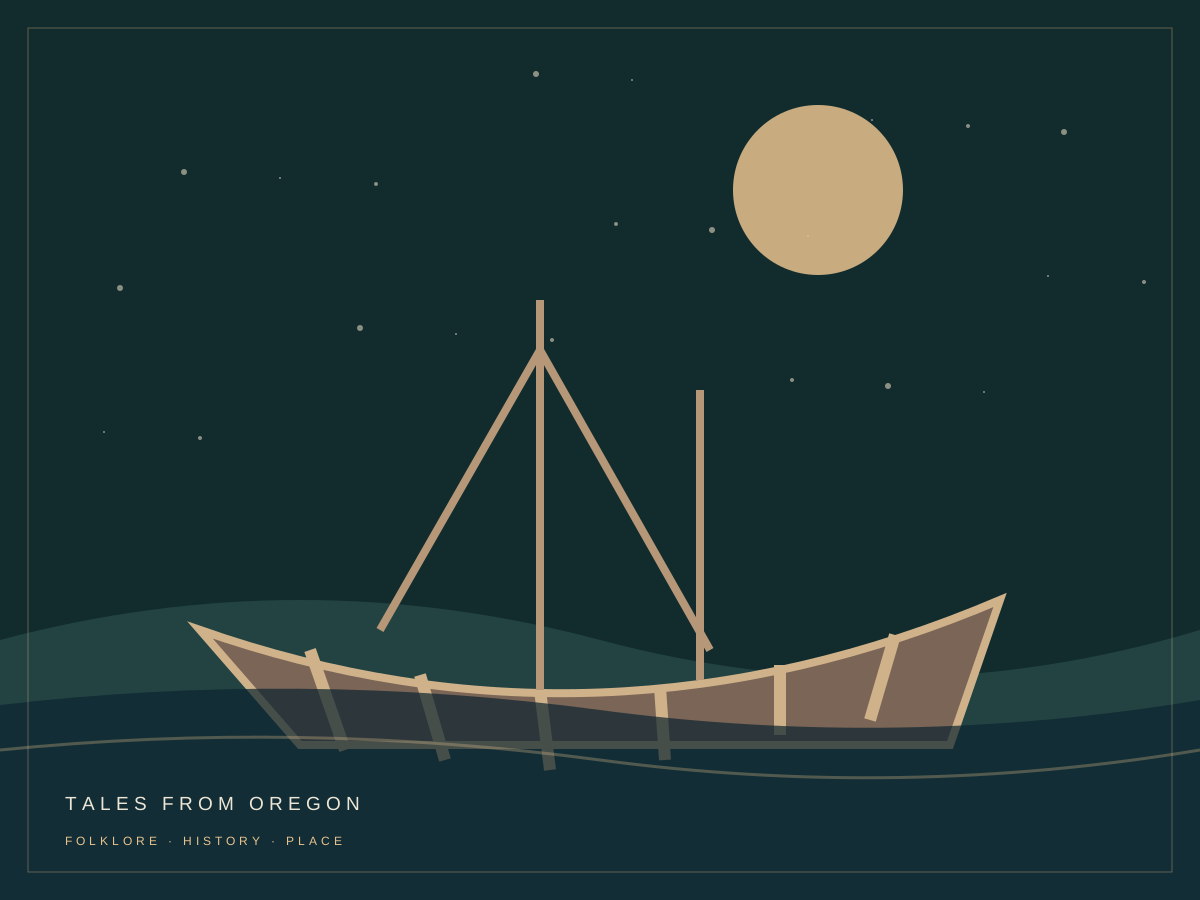
A ship’s steel remains in the sand can look like a ghost story that forgot to leave. The Peter Iredale gives Oregon one of those instantly recognizable coastal images. But the most satisfying detail is not a phantom captain: the people aboard survived the wreck. The silhouette is eerie; the human story has a different ending.
A voyage interrupted at the coast
The Oregon Historical Society describes the Peter Iredale as a four-masted steel sailing vessel built in England in 1890. In 1906 it sailed from Mexico toward Portland, where it was to collect wheat for Britain. The remains now associated with a beach visit once belonged to an international working voyage.
On October 25, 1906, the ship ran aground near Fort Stevens. The historical account describes difficult conditions around the Columbia River approach. Looking at the wreck through that timeline puts movement back into the picture: a crew, a destination and a ship that was supposed to continue on its way.
The detail to tell before the ghost story starts
None of the crew were seriously injured, according to the historical society’s account. That matters when an ominous photograph encourages people to assume a mass tragedy. A skeletal ship can be the visual remnant of a disaster without being a memorial to everyone aboard dying.
Let children know that survival detail early. Then the conversation can move toward the work of mariners and rescuers rather than an invented roll call of ghosts. Ask what a rescue would have required on that coast. The real stakes are compelling enough without assigning imaginary victims to the wreck.
Read an old photograph beside the present
The Oregon History Project publishes an early photograph and an account of the grounding. Comparing an archival view with a modern view is a useful way to think about time. A wreck is not a fixed stage set: weather, sand and the sea continue to change what visitors can see.
Avoid promising that a particular part will be exposed on a particular trip. Instead, make the comparison the activity. What is recognizable? What seems missing? How does the scale of a person or a horizon help you imagine the ship before it became a fragment of the shoreline?
A coast stop with room for the real story
Use Fort Stevens State Park’s current visitor information before setting out, and follow posted beach guidance and conditions on the day. Look from a sensible distance and leave the wreck undisturbed. There is no need to climb metalwork, take pieces or move into the surf for a more dramatic image.
For a local reading night, pair the old photograph with a map of the Columbia River mouth. Give each person one job to imagine aboard a working sailing ship. A place that first seemed like a spooky backdrop becomes a story about travel, skill and people getting home alive.
Sources & further reading
Checked October 18, 2026. These links support the historical details and identify the public traditions discussed here. Visit information can change; check the operator’s current notice before traveling.
Keep it close to home
More stories from Oregon

Cannon Beach · Roadside ghost story
Cannon Beach’s Bandage Man: the passenger nobody invited
Meet Cannon Beach’s Bandage Man, the bandaged phantom of Oregon Coast roadside folklore, through a local museum’s account and a story-night guide.
Read the local story ↗
Cape Meares · Natural curiosity
The Octopus Tree: Oregon’s forest silhouette that needs no invented monster
Discover Cape Meares’ Octopus Tree, the unusually shaped Sitka spruce with sprawling limbs, plus an observation game for an Oregon Coast family outing.
Read the local story ↗
Heceta Head · Lighthouse folklore
Heceta Head’s Rue: the ghost story beside Oregon’s lighthouse
Read the Heceta Head keeper’s-house story of Rue alongside Oregon’s coastal lighthouse history, with clear labels for folklore and a practical visit check.
Read the local story ↗
Forest Park, Portland · History behind a nickname
Portland’s Witch’s Castle: the stone ruin behind the nickname
Explore the real Macleay Park Shelter beneath Portland’s Witch’s Castle nickname, using Forest Park Conservancy’s architectural history rather than invented witch lore.
Read the local story ↗Put this guide to work
Compare the relevant frames and ordering details before choosing your pair.