Close to home · Oregon · Volume two
Natural curiosity
The Octopus Tree: Oregon’s forest silhouette that needs no invented monster
Some trees look as if a storyteller got to them first. At Cape Meares, a Sitka spruce sends out enormous limbs close to the ground instead of presenting the familiar single trunk. Its name supplies the creature: the Octopus Tree. The real tree is strange enough to hold everyone’s attention without a ghost hiding in the branches.
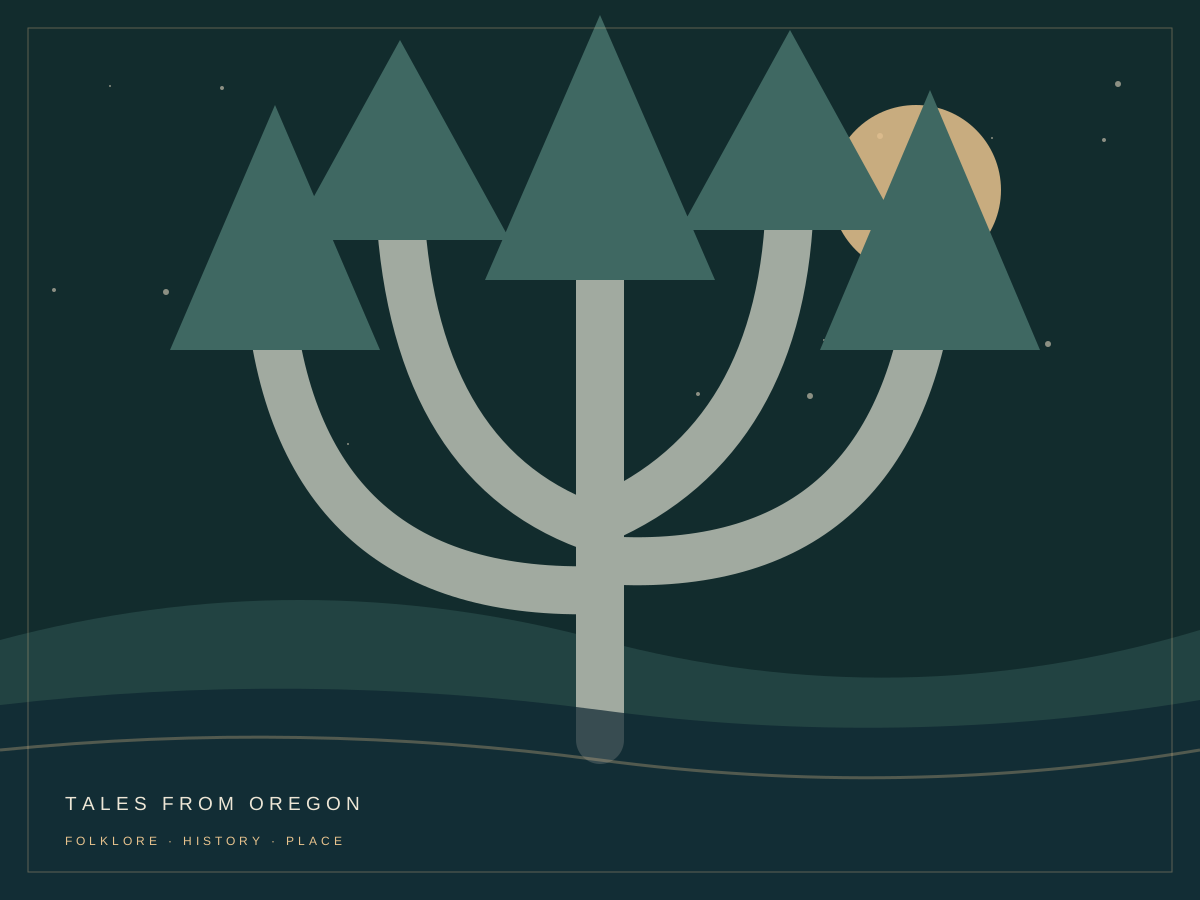
A tree that changes the outline
Oregon State Parks describes the unusual form: no central trunk, with substantial limbs branching near the ground. Against the familiar expectation of a spruce, that spreading shape is what makes the nickname work. You recognize a tree and then keep looking because its structure is not the one you expected.
That is the beginning of a good local curiosity. You can enjoy the animal resemblance without turning it into a literal claim. Stand back, trace one limb with your eyes and notice where the tree seems to become several shapes at once. The name gives you a first impression; observation supplies the rest.
Keep the unanswered question open
It is tempting to give an unusual tree a single dramatic origin. But the public state-park description used here establishes its appearance, not a definitive explanation of how every limb acquired its form. An appealing story about shaping the tree needs its own credible source before it becomes history.
With children, make three categories: what we can see, what the park tells us, and what we are imagining. Those categories make room for curiosity. A child can draw an octopus-shaped forest creature and still know that the living tree in front of them is a Sitka spruce.
A small observation game for the family
Before reading the nickname aloud, ask everyone to choose an animal or object the silhouette suggests. Then compare answers. The fun is in how one person sees a candelabra while another sees arms, a crown or something with too many elbows. No answer needs to become the official explanation.
Try drawing the outline from memory after walking away. Which branch was easiest to remember? Did everyone remember the same side? This turns a quick photograph into a longer encounter, and it works just as well with an ordinary neighborhood tree when you get home.
Leave the living landmark as you found it
The state park and wildlife-refuge visitor pages place the tree among Cape Meares’ public attractions. Use current maps, trail information and notices to plan your stop, and stay within the designated visitor area. A tree with an extraordinary shape does not need visitors climbing it or crossing barriers to improve a photograph.
Cape Meares can be part of a coastal history-and-nature day, with the lighthouse and other sights considered according to current access. Give the tree its own pause rather than treating it as a box to check. For a spooky October mood, a dramatic silhouette is often all the scenery a storyteller needs.
Sources & further reading
Checked October 18, 2026. These links support the historical details and identify the public traditions discussed here. Visit information can change; check the operator’s current notice before traveling.
Keep it close to home
More stories from Oregon

Cannon Beach · Roadside ghost story
Cannon Beach’s Bandage Man: the passenger nobody invited
Meet Cannon Beach’s Bandage Man, the bandaged phantom of Oregon Coast roadside folklore, through a local museum’s account and a story-night guide.
Read the local story ↗
Fort Stevens coast · Shipwreck history
Peter Iredale: Oregon’s ship skeleton has a story of survival
Read the real 1906 story behind Oregon’s Peter Iredale shipwreck: a haunting beach silhouette, a rescued crew, and a thoughtful Fort Stevens visit.
Read the local story ↗
Heceta Head · Lighthouse folklore
Heceta Head’s Rue: the ghost story beside Oregon’s lighthouse
Read the Heceta Head keeper’s-house story of Rue alongside Oregon’s coastal lighthouse history, with clear labels for folklore and a practical visit check.
Read the local story ↗
Forest Park, Portland · History behind a nickname
Portland’s Witch’s Castle: the stone ruin behind the nickname
Explore the real Macleay Park Shelter beneath Portland’s Witch’s Castle nickname, using Forest Park Conservancy’s architectural history rather than invented witch lore.
Read the local story ↗Put this guide to work
Compare the relevant frames and ordering details before choosing your pair.