Close to home · Oregon · Volume three
Ghost-town history
Golden, Oregon: the ghost town that skipped the saloon stereotype
Picture a western ghost town and a swinging saloon door may arrive before the rest of the street. Golden asks you to change that picture. Its story includes gold mining, churches and an orchard, with a striking absence of town-center saloons. The quiet buildings are a reminder that real communities rarely follow a movie’s casting instructions.
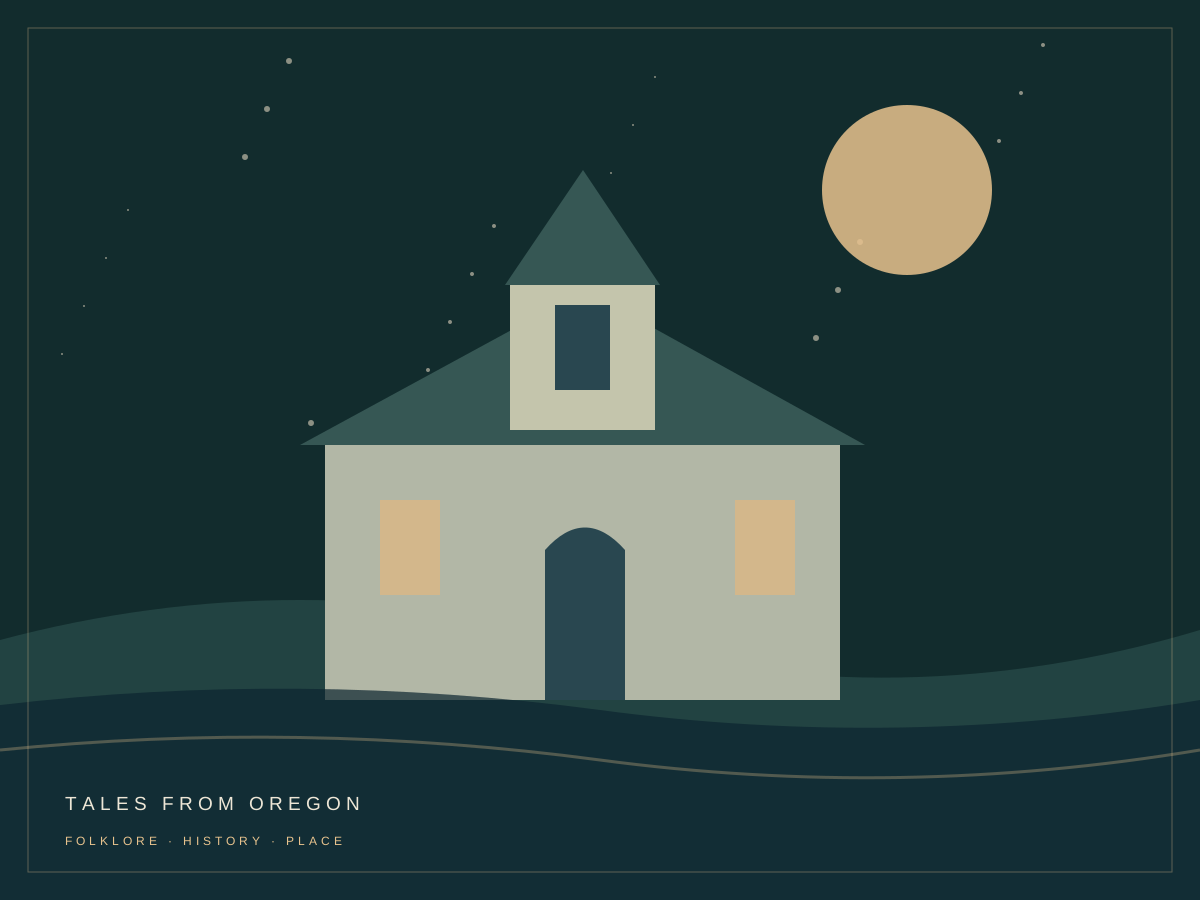
A gold town with a different center
The state park account traces an 1850s mining camp to a town established around 1890. At its peak, Golden housed about 100 people and served others working farther out. Its two churches and lack of saloons in the town center distinguish it from the familiar fictional mining-town main street.
That difference is a good opening question. What gathering places would matter in a community shaped this way? Try imagining a week around work, shopping, worship and conversation. A town can have disagreements, ambitions and complicated lives without supplying the exact buildings a visitor expects from a western.
Four buildings make a surprisingly full conversation
Oregon State Parks lists a church, a former residence, a shed and a building that held a post office and store. Each points toward an ordinary need. A letter, a tool, a meal or a community meeting can be the starting point for picturing people rather than simply photographing empty spaces.
Give everyone in the family one building to think about. What would you carry into it? What would you leave with? That exercise helps younger visitors connect a surviving structure with daily life, while adults may notice how much of a community depended on a handful of shared services.
The landscape was part of the workplace
The state’s cultural-landscape report treats Golden as a mining community together with the surrounding mining landscape. Reading the town only as a row of old buildings misses the work that made people settle there. The valley and creek belong in the picture alongside doors and roofs.
You do not need to approach an old excavation to understand that connection. Use the available interpretation and look from designated visitor areas. Ask where the work happened and how people moved between it and home. The distance between those two places can tell as much as a grand building.
A quieter kind of Southern Oregon outing
Check the current Golden State Heritage Site page for access and notices before traveling. Explore only areas open to visitors, leave structures and objects as you find them, and resist the temptation to turn an old building into an after-dark challenge. Preservation is what makes the next person’s encounter possible.
At home, compare Golden with one Montana ghost town in this journal. Which place does your family picture more clearly, and which detail made it distinctive? Golden’s strongest detail may be an absence: it changes a familiar story by leaving out the saloon you assumed would be there.
Sources & further reading
Checked October 18, 2026. These links support the historical details and identify the public traditions discussed here. Visit information can change; check the operator’s current notice before traveling.
Keep it close to home
More stories from Oregon
Wolf Creek · Historic inn folklore
Wolf Creek Inn: the Oregon stop where the ghost stories check in too
Read Wolf Creek Inn’s reported piano, voice and moving-object tales beside the real history of Oregon’s 1883 stagecoach inn and state heritage site.
Read the local story ↗
Cannon Beach · Roadside ghost story
Cannon Beach’s Bandage Man: the passenger nobody invited
Meet Cannon Beach’s Bandage Man, the bandaged phantom of Oregon Coast roadside folklore, through a local museum’s account and a story-night guide.
Read the local story ↗
Cape Meares · Natural curiosity
The Octopus Tree: Oregon’s forest silhouette that needs no invented monster
Discover Cape Meares’ Octopus Tree, the unusually shaped Sitka spruce with sprawling limbs, plus an observation game for an Oregon Coast family outing.
Read the local story ↗
Fort Stevens coast · Shipwreck history
Peter Iredale: Oregon’s ship skeleton has a story of survival
Read the real 1906 story behind Oregon’s Peter Iredale shipwreck: a haunting beach silhouette, a rescued crew, and a thoughtful Fort Stevens visit.
Read the local story ↗Put this guide to work
Compare the relevant frames and ordering details before choosing your pair.