The frame shortlist · Guide 4 of 20
Geometric Glasses for Round Faces Without an Oversized Look
You can try angles without choosing a huge frame. A gently squared oval or a small beveled corner may provide the geometric detail you want while keeping the overall silhouette familiar.
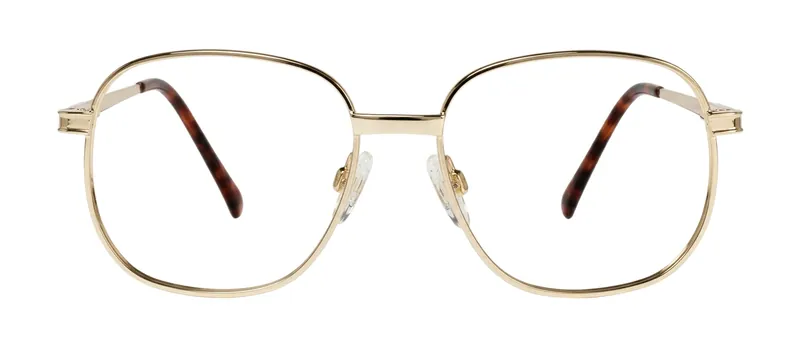
Decide where the angles should be
Some geometric frames put corners at the top; others repeat them around the whole lens. Start by deciding which part catches your eye. A flat upper edge and curved lower edge will usually feel different from an even-sided polygon, even when both appear under “geometric.”
Compare at a believable scale
Retail images can make a small frame fill an entire screen. Use listed measurements and a known pair as your reference. If the front width is unavailable, ask for it rather than estimating from the image. Lens width alone does not describe the distance across the whole frame.
Make a two-frame shortlist
Pick one subtle angular style and one familiar rectangle or round style. Keep the price and lens choices comparable. Then ask whether the geometric detail adds something you want for daily wear or simply makes the product photo more interesting.
A quick comparison
| Compare | What it changes | Your next check |
|---|---|---|
| Flat-top oval | One clear horizontal edge | A gentle change |
| Soft hexagonal | Several softened corners | More visible geometry |
| Sharp polygon | Repeated strong angles | A statement comparison |
Will geometric frames work with my prescription?
Ask about the exact frame and your prescribed lenses. A category label cannot establish lens suitability, thickness or finished fit.
Keep exploring
Put this guide to work
Compare the relevant frames and ordering details before choosing your pair.