Close to home · Delaware · Volume three
Marsh-country history
The old house in the marsh country: Bombay Hook’s Allee House story
A quiet brick house near fields and marsh can look as though it is waiting for someone to explain why it is there. At Bombay Hook, Allee House supplies that moment of curiosity. Its story is not a documented haunting. It is the older human landscape behind a place many Delaware visitors now associate first with birds and open sky.
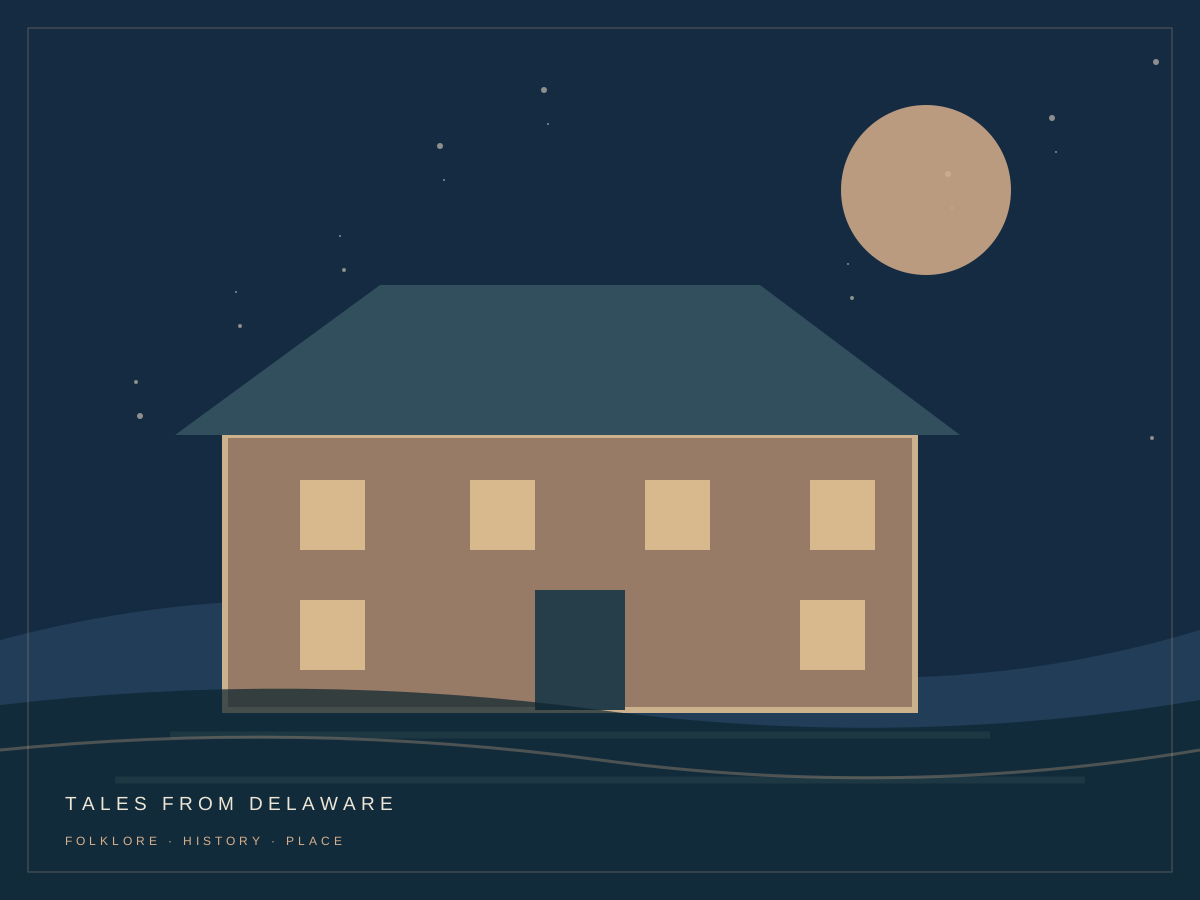
A farmhouse with a carefully made face
The refuge’s history traditionally dates the house to about 1753 and associates it with Abraham Allee. Its description calls attention to Flemish-bond brickwork with glazed bricks, as well as elaborate parlor woodwork. This was a home shaped by choices and craft, not simply an anonymous old building beside a nature destination.
Pick one feature to learn about rather than trying to memorize an entire family tree. A brick pattern can make you notice another house on the next drive. An arched cupboard can suggest the work of making an interior both useful and pleasing. Details turn a distant facade into a human project.
Paint layers can keep a record
The Fish and Wildlife Service describes restoration work that examined successive paint layers to find earlier colors. Archaeological work also recovered household materials around and beneath the building. The past was present in small physical traces, not only in a written account of ownership.
That is a good mystery for a family conversation: how do you learn what a room used to look like without a color photograph? Start with the evidence, then imagine the choices restorers face. The exercise makes patient investigation more interesting than inventing a locked-room ghost to explain an old house’s atmosphere.
The refuge has more than one history
Bombay Hook was established as a wildlife refuge in 1937. The fields, buildings and earlier land uses remind a visitor that conservation landscapes also have human histories. A birding trip and a history question can share the same map without either becoming a distraction from the other.
Ask which parts of a landscape make earlier activity visible and which have become harder to read. A house may stand out, while an old route or daily working pattern does not. Reading the refuge’s interpretation can help you look beyond the most photogenic object and understand why different features survive.
A closed house can still begin a good story
The current refuge history page says Allee House is closed for repairs, with water damage affecting its structure. Do not plan an interior tour or treat an old opening date as current. Check the refuge’s latest visitor notices and ask staff what historical interpretation and public routes are available.
For a day at home, compare an archival house description with a drawing of a room your family knows well. Which details would a future reader need to reconstruct it? A house can hold compelling questions without anyone entering it: who made it, what changed, and what careful work will allow it to survive.
Sources & further reading
Checked October 18, 2026. These links support the historical details and identify the public traditions discussed here. Visit information can change; check the operator’s current notice before traveling.
Keep it close to home
More stories from Delaware
Selbyville and Great Cypress Swamp · Documented monster hoax
The Selbyville Swamp Monster: Delaware’s creature with a costume in its past
Explore the Selbyville Swamp Monster through Fred Stevens’s firsthand admission, a raccoon-coat costume and the newspaper stunt behind a Delaware legend.
Read the local story ↗
Newark · Literary folklore
Poe’s supposed curse: why Newark keeps returning to the Deer Park story
Follow Newark’s Edgar Allan Poe and Deer Park legend, separate the 1843 visit from later storytelling, and spot the timeline problem in a famous local claim.
Read the local story ↗
Lewes · Museum curiosity
Lewes’s little sea monster: meet the Zwaanendael Merman
Meet the Zwaanendael Merman, Lewes’s strange museum curiosity, and learn how a made creature became a real part of Delaware’s local collecting history.
Read the local story ↗
Wilmington · Estate folklore
Bellevue Hall’s restless-house tale: a Delaware park with an earlier life
Explore Bellevue Hall’s reported ghostly disturbances alongside its former-estate history, with a practical distinction between park access and house tours.
Read the local story ↗Put this guide to work
Compare the relevant frames and ordering details before choosing your pair.