Close to home · Delaware · Volume two
Museum curiosity
Lewes’s little sea monster: meet the Zwaanendael Merman
Delaware has a sea creature you can investigate without waiting for a ripple offshore. The Zwaanendael Merman is a small, startling museum object with the look of a tall tale made solid. The fun is not proving that a monster lived in Delaware Bay. It is discovering why people made creatures like this—and why Lewes chose to keep one.
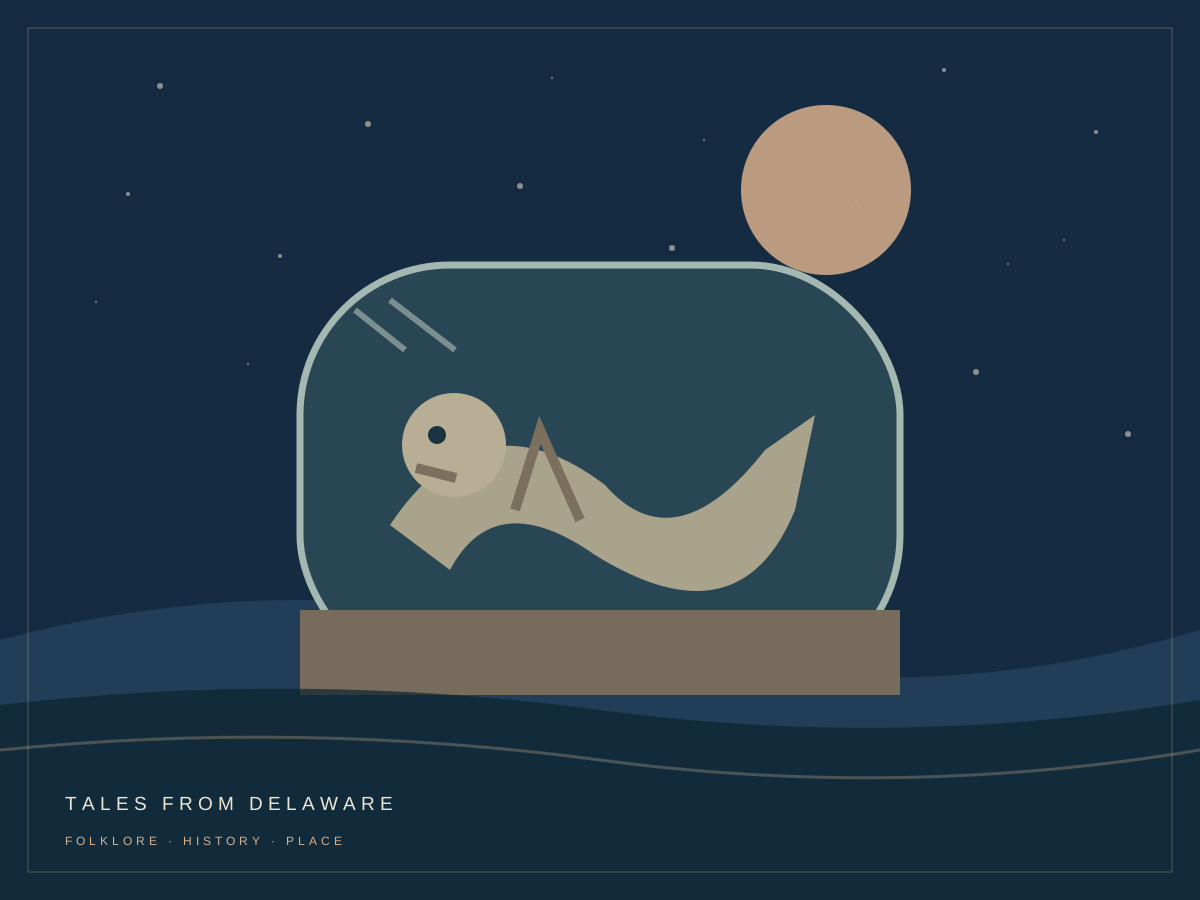
A creature assembled for a second look
The state museum describes the object as a combination of animal and manufactured materials. Its curators believe it was made in China in the mid-nineteenth century. It belongs to a tradition of created curiosities that could serve as jokes, exhibits or props for an extraordinary story.
That explanation gives you a better mystery to explore: how does something assembled persuade a viewer to imagine it alive? Look at the overall silhouette before the details. The border between recognizable parts and an unfamiliar whole is where the little creature does its most effective work.
The Lewes story is about keeping it
According to the museum, the object belonged to the Martin family of Lewes after a sea captain gave it to a family member. It went on display at the Zwaanendael Museum in 1941. Later, residents and the Lewes Historical Society raised money to purchase it and gave it to the museum in 1985.
That is an unexpectedly affectionate turn. A manufactured creature became something a community wanted to preserve. Its importance does not depend on fooling a scientist: the family connection, the collecting history and the public effort to keep it are real local stories in their own right.
A monster conversation that works in daylight
For a family activity, ask what clues suggest the object was made. Then invent a completely fictional museum creature on paper, labeling each imagined part. The goal is creative observation, not convincing a younger sibling that a frightening animal is hiding in the bay.
Some children may find the object unsettling, so preview its appearance and let them decide whether to look. You can keep the conversation on the community story instead: why do people save odd things, and which strange object would your family choose to keep for future generations?
Make it part of a Lewes history stop
The Zwaanendael Museum interprets the area’s maritime, military and social history. Its building dates to 1931, commemorating the Dutch colony established in 1631. The Merman can be a memorable first question, followed by the larger history around it rather than an entire visit reduced to one oddity.
Check the museum’s current hours, display arrangements and accessibility before traveling. The Merman is listed in the second-floor gallery, while the visitor page identifies first-floor wheelchair access; ask staff about viewing options if stairs are a concern. A little planning lets the curiosity stay delightful instead of becoming a disappointing surprise at the door.
Sources & further reading
Checked October 18, 2026. These links support the historical details and identify the public traditions discussed here. Visit information can change; check the operator’s current notice before traveling.
Keep it close to home
More stories from Delaware
Wilmington · Estate folklore
Bellevue Hall’s restless-house tale: a Delaware park with an earlier life
Explore Bellevue Hall’s reported ghostly disturbances alongside its former-estate history, with a practical distinction between park access and house tours.
Read the local story ↗
Pea Patch Island · Fortress folklore
Fort Delaware’s ghost stories: the island history behind the chills
Explore Fort Delaware’s island setting, Civil War prison history and paranormal-tour tradition while keeping reported apparitions separate from established evidence.
Read the local story ↗
Dover · Historic-house folklore
Woodburn’s extra guest: the ghost story inside Delaware’s governor’s house
Read Woodburn’s official ghost tradition, including the staircase guest and wine-glass tale, with a clear distinction between a published legend and proof.
Read the local story ↗
Wilmington area · Historic-house folklore
Rockwood’s Gothic mood: the Delaware estate behind the ghost stories
Explore Rockwood’s Gothic atmosphere, Shipley and Bringhurst history, and themed storytelling through New Castle County’s own museum information.
Read the local story ↗Put this guide to work
Compare the relevant frames and ordering details before choosing your pair.